Relationships · Identity · Grief · Anxiety

Counselling for the parts of life that feel hard to place

Warm, thoughtful therapy for relationships, identity, grief and anxiety — with a therapist's care and an anthropologist's eye. Online across the UK, and walk-and-talk in Edinburgh. In English and Italian.

Request a free 10-minute chat

Individual sessions from £65 · First conversation free · By email — no forms, no pressure

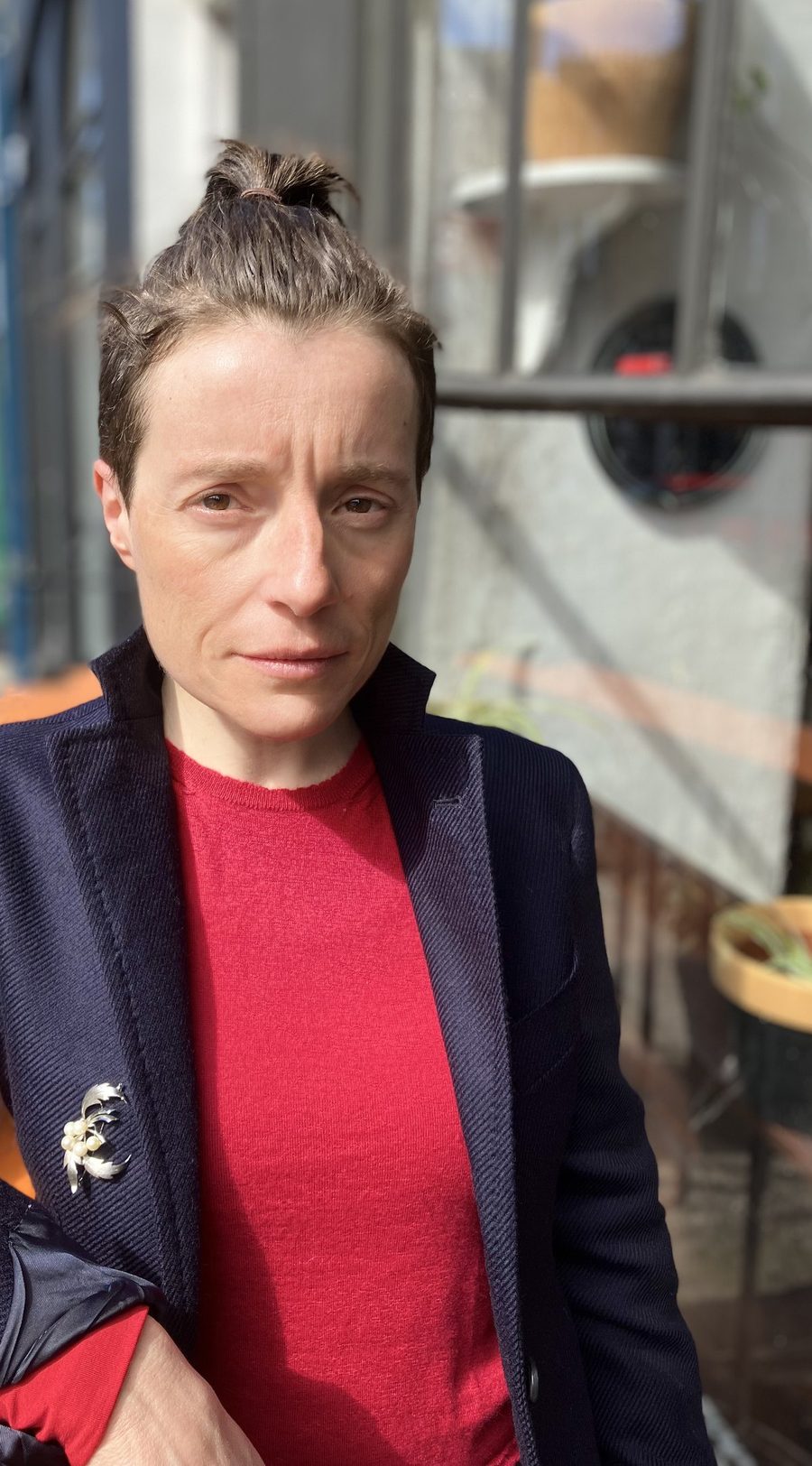
Dr Irene M C Soldavini, BACP-registered counsellor and relationships therapist in Edinburgh
Dr Irene M C Soldavini · BACP Registered

An approach shaped by anthropology

Hello, I'm Irene. Whatever's brought you here, my aim is to offer a warm, unhurried space where you feel genuinely listened to — and where we can make sense of things together, at your own pace.

What makes my work distinctive is a background in anthropology alongside my therapy training: years spent studying how culture, relationships, belief and social context shape our sense of self.

That background makes me particularly well-placed to work with people from migrant and diaspora backgrounds, multilingual and multicultural individuals, and anyone navigating questions of identity and belonging — alongside the relationships, grief and anxiety that bring most people to therapy.

I'm a BACP-registered counsellor and relationships therapist, and I've worked across LGBTQIA2S+ mental health services, relationship counselling, and low-cost services in London and Edinburgh. Whatever your background or the shape of your relationships, you're welcome here.
i

Awareness

Attention to how culture, power and context shape every story brought into the room.

ii

Compassion

A warm, professional space where your experiences can be heard and understood.

iii

Inclusiveness

An affirming practice for all identities, lifestyles, and ways of loving and connecting.

A phenomenological stance
I begin not from a diagnosis, but from your experience as you live it.

Phenomenology means setting aside assumptions and staying close to lived experience — how things feel, seem and matter to you, before we explain or label them. Rather than fitting you into a theory, I try to understand the texture of your situation from the inside. It underpins everything else I draw on.

Phenomenological by principle

No single approach works for everyone, so I draw flexibly on several traditions to find what fits you — well suited to anyone who hasn't found conventional therapy helpful, or who wants to think deeply about their life rather than just manage symptoms.

Phenomenology
The ground I work from — staying close to experience as you actually live it, before we explain or label. Everything below rests on this careful, unhurried attention.
Psychodynamic therapy
Exploring how past experiences and unconscious patterns shape the present.
Existential philosophy
Finding meaning, purpose and direction through life's deepest questions.
Compassion Focused Therapy
Building self-compassion and emotional resilience, including for grief and loss.
Existential anthropology
Understanding the real, lived experience of trying to make a meaningful life within the circumstances you're given.

What we can work on together

I

Relationships & intimacy

Couples counselling, consensual non-monogamy and polyamory, and other relationship structures (GSRD). An affirming space for all the ways people love and connect.

II

Identity, culture & belonging

Migration, displacement, multicultural and multilingual experience, and the questions of self that come with living between worlds.

III

Gender & sexuality

LGBTQIA2S+ affirmative therapy, and affirmative therapy for sex workers and people with unconventional lifestyles.

IV

Grief & loss

Bereavement, and the "living losses" of change, separation, and letting go.

V

Anxiety & feeling stuck

When life feels overwhelming, isolating, or hard to make sense of.

Who this kind of therapy suits

I work with adults experiencing mild to moderate mental health difficulties. Severity here isn't about how much your situation matters — it's a clinical way of describing how intense your symptoms are and how much they affect your ability to function day to day.

Mild difficulties are present and can be distressing, but tend to interfere only modestly with everyday life — you are generally still able to work, maintain relationships and manage routines. Moderate difficulties are more intense or persistent and have a clearer impact on daily functioning — sleep, concentration, motivation, work or relationships may be noticeably affected — but you remain safe and able to engage in talking therapy. Common examples include anxiety, depression, stress, low self-esteem, bereavement, life transitions and relationship difficulties.

Some difficulties fall outside what one-to-one counselling is designed to treat. These include severe, complex or enduring conditions — for example psychosis, bipolar disorder, severe depression, eating disorders, or any situation involving risk to your safety — which usually need specialist or multidisciplinary care. If this is closer to your experience, I'd warmly encourage you to speak to your GP or one of the services listed at the foot of this page, who can help you access the right level of support. If you're unsure where you fit, you're welcome to ask in a free initial chat — we can think it through together.

Please note that, as a counsellor, I do not provide formal diagnoses or prescribe medication. A diagnosis can only be made by a GP, psychiatrist or clinical psychologist. What I offer is a space to understand and work through your experience — and, where helpful, I can support you in seeking an assessment elsewhere.

If any of this sounds familiar, you don't have to work it out alone.

Request a free 10-minute chat

Sessions & fees

Online

Online counselling

Sessions via Zoom — a flexible, accessible way to find support from the comfort of your own space. Available in English and Italian, short or long-term.

In person

Walk & talk therapy

Walk-and-talk sessions in Edinburgh, with movement and open air as part of the reflective space.

Individual counselling50 minutes
£80
Relationship counselling50 minutes
£160
Concession rateIndividual · 50 minutes
£65

A limited number of concession-rate spaces are available. If you believe you qualify, please get in touch.

Qualifications & memberships

Qualifications

  • BA Anthropology & Communication, Goldsmiths University of London
  • MA Anthropology of Media, SOAS University of London
  • PhD Anthropology & Film Studies, SOAS University of London
  • Diploma in Couple Counselling, Relationships Scotland
  • Foundation Course in Core Process Psychotherapy, Karuna Institute
  • MSc in Existential Psychotherapy, NSPC — ongoing
  • Compassion Focused Therapy — Introduction, Grief & Hoarding, The Compassionate Mind Foundation
  • Introduction to Walk & Talk Therapy

Memberships

  • BACP registered member · no. 398713
  • UPCA trainee member
  • Member of the Society for Existential Analysis (SEA)
BACP registered member 398713 — accredited register, Professional Standards Authority

Areas of interest

  • Anxiety · Bereavement · Grief & losses
  • Consensual non-monogamy · Polyamory · Couple counselling
  • Diasporic issues · Displacement · Identity
  • Epistemic, hermeneutic & testimonial injustice
  • GSRD · LGBTQIA2S+ · Sex workers affirmative therapy
  • Isolation · Loneliness · Hoarding · Politics

Questions, answered

What does "phenomenological" mean in practice?+

It means I start from your experience as you actually live it — staying close to how things feel, seem and matter to you, before reaching for any theory or label. Rather than fitting you into a fixed model, we stay with the texture of your situation and draw, where it helps, on psychodynamic, existential and compassion-focused ideas — deciding together, openly, as we go.

Do you work in languages other than English?+

Yes. Sessions are available in both English and Italian. Multilingual and multicultural experience is a particular focus of my work.

Where do walk-and-talk sessions take place?+

In Edinburgh. We walk together while we talk, using movement and open air as part of the reflective space. Online sessions are available everywhere in the UK via Zoom.

Is your practice LGBTQIA2S+ and GSRD affirmative?+

Yes — fully. I offer affirmative counselling for LGBTQIA2S+ people, polyamorous and non-monogamous relationships, sex workers, and people with unconventional lifestyles. All identities and relationship structures are welcome.

Does "Dr" mean you are a medical doctor?+

No. The title "Dr" denotes an academic qualification — my PhD in Anthropology and Film Studies — not a medical one.

Can you help in a crisis?+

I am unable to provide a crisis service. If you need urgent help, please contact your GP, NHS 24 on 111, or the Samaritans on 116 123, and in an emergency call 999. A full list of urgent support is at the foot of this page.

How soon will I hear back after emailing?+

I read every email myself and reply personally, usually within a couple of working days. There's no automated system and no obligation — the first conversation is simply a chance to ask questions and see whether working together feels right.

How to start

i

Send a short email

A line or two is plenty — just say you'd like a first chat. There's no form to fill in and nothing you need to explain yet.

ii

A free 10-minute conversation

We talk briefly, with no obligation, so you can get a feel for me and ask anything you'd like. Finding the right fit matters more than anything.

iii

Begin when you're ready

If it feels right, we arrange a first full session — online across the UK, or walk-and-talk in Edinburgh. If it doesn't, that's completely fine too.

Reaching out for the first time can feel like a big step. You're welcome to take it at your own pace.

Taking the first step

Arrange an initial conversation

Finding the right therapist matters. I'd be glad to discuss whether therapy with me feels the right fit for you.

Request a free 10-minute chat
OnlineVia Zoom, across the UK
In personWalk & talk · Edinburgh
LanguagesEnglish & Italian

Urgent support & crisis services

I am not a crisis service and cannot offer emergency or out-of-hours support. If you are struggling right now, please reach out to one of the services below — free, confidential, and there to help.

999 In a life-threatening emergency, or if you've seriously harmed yourself, call 999 or go to your nearest A&E.
NHS 24
Call 111

Urgent mental health support in Scotland — call 111 and choose the mental health option.

24 hours · every day

Samaritans
116 123

A safe, confidential space to talk, whatever you're going through. Free to call.

24 hours · every day

Breathing Space
0800 83 85 87

A confidential phone line for anyone in Scotland aged 16+ feeling low, anxious or depressed.

Mon–Thu 6pm–2am · weekends 6pm–6am

Edinburgh Crisis Centre
0808 801 0414

Community-based emotional and practical support in crisis, for people aged 16+ in Edinburgh.

24 hours · every day

SHOUT
Text 85258

Free, confidential support by text message from a trained volunteer, if you'd rather not call.

24 hours · every day

CALM
0800 58 58 58

The Campaign Against Living Miserably, for anyone affected by suicide or suicidal thoughts.

5pm–midnight · every day

These services are free and confidential. Many have their own policies if they believe someone is in immediate danger — you can ask them to explain when you call. If you are already under the care of a mental health team, your care plan should say who to contact in a crisis.